

Manager Merry-Go-Round
Another manager gone, another familiar feeling. This member opinion piece looks beyond Ruben Amorim’s exit to the deeper, long-running issues at Manchester United - and why the constant cycle of hiring and sacking has to end.
D A
1/5/20264 min read
The Merry-Go-Round Has to Stop
If the rumours are to be believed, Ruben Amorim knew he was going to be sacked before the Leeds game. If that’s true, it explains a lot - his demeanour beforehand, the flatness afterwards, and the sense that this was already done. And that, more than anything, is deeply sad.
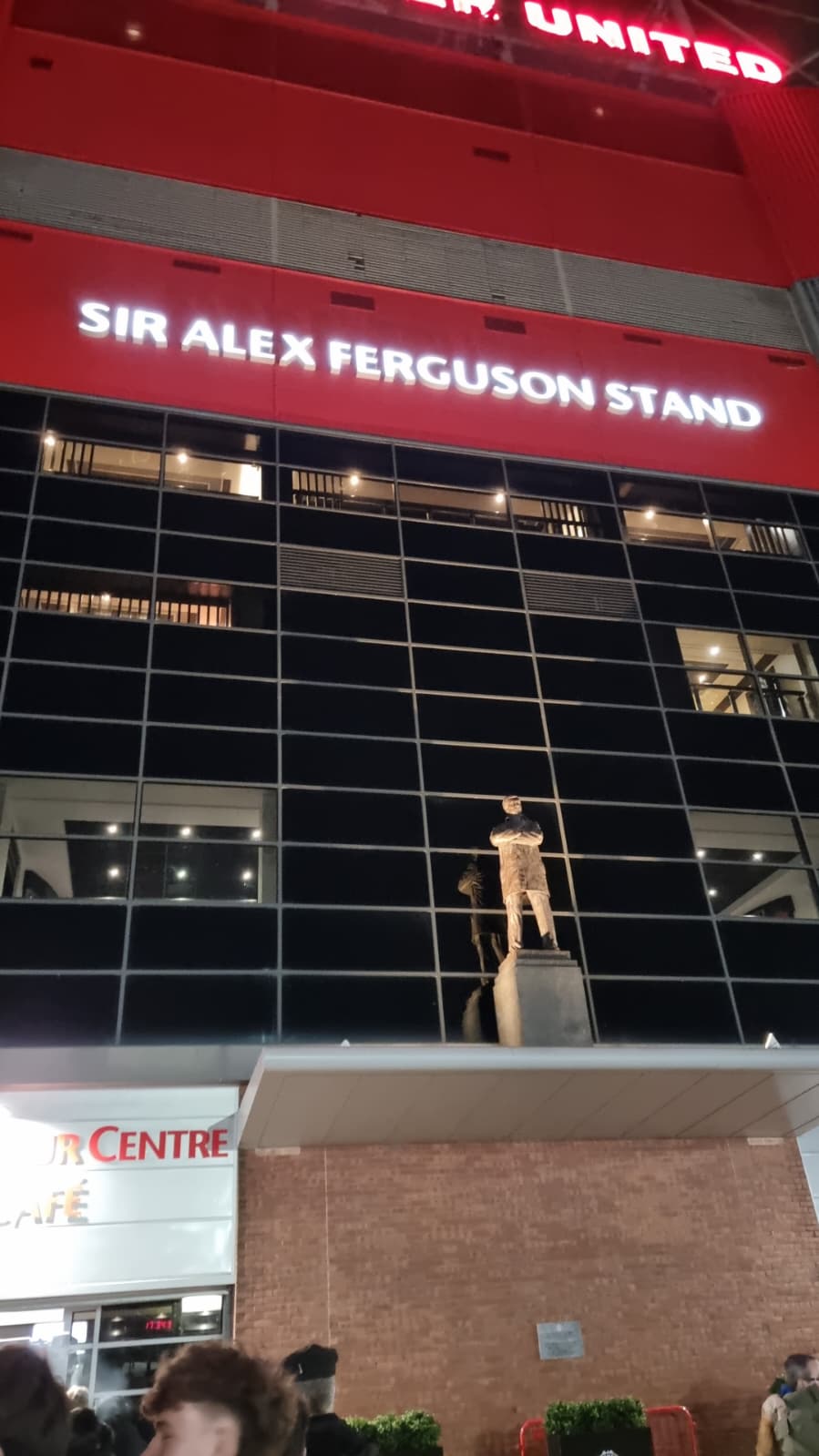
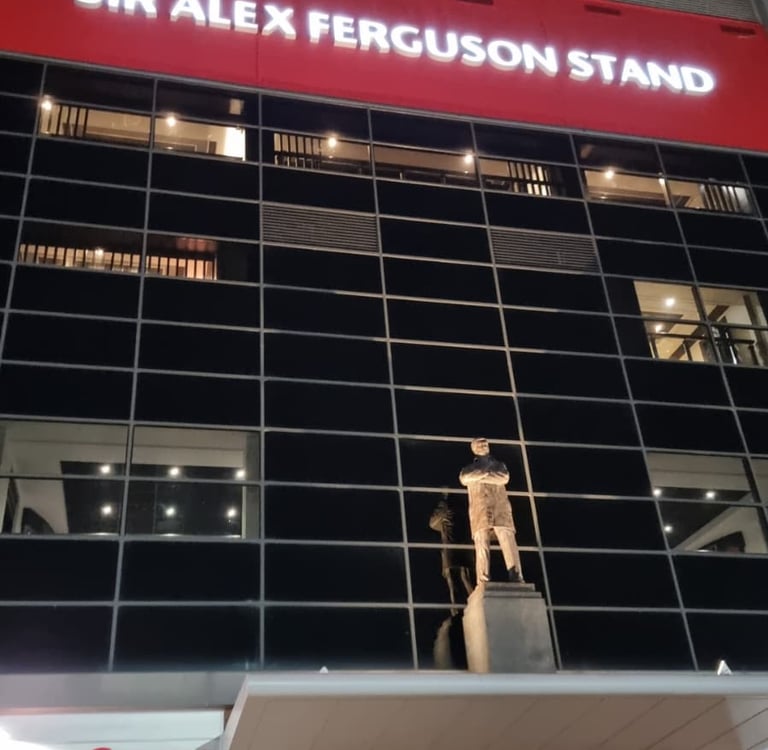
Because it feels inevitable. Familiar. Another turn of the same wheel we’ve been riding ever since Sir Alex Ferguson left.
It’s easy to say United fans deserve better. Every supporter of every club feels that way. What actually sets Manchester United apart, though, is not entitlement - it’s resources. The money has always been there. The financial backing has never really disappeared. What has disappeared is competence in how it’s been used.
The biggest loss we’re feeling isn’t Ferguson himself; it’s the absence of figures like Martin Edwards or David Gill - people who understood how to align football decisions with long-term thinking.
For 26 years we didn’t sack a manager. Since then, we’ve gone through ten in just over twelve years. The compensation alone tells its own story. And yet we keep pretending we’re “not a sacking club”, even as the evidence screams the opposite. We are one - and the most worrying thing is that we no longer seem to understand why.
Amorim arrived with a big reputation. United paid compensation to get him out of his previous contract, fully aware of the style of football he plays and the control he expects. Nobody can pretend this was a surprise appointment. So the inevitable question follows: was he actually backed, or was he backed only in theory?
We’ll never know the full truth. But what is clear is that the squad problems were obvious long before he arrived. Central midfield needed sorting. Instead, we ended up reshuffling pieces that didn’t need moving. Bruno Fernandes - one of the best number tens in the game - was sacrificed. Casemiro, an admirable servant, was asked to keep holding things together despite clearly not being the future. Everyone knows he’s likely gone in the summer. So why wasn’t this planned properly?
That said, Amorim also has to take some responsibility. It’s possible to criticise the structure and acknowledge that he didn’t help himself.
His formation, in isolation, was not the problem. The issue was persistence without adaptation. If he didn’t have the players to execute his system - and it quickly became apparent that he wasn’t going to be given different ones - then the inability to adjust was damaging.
The substitutions, too often, left a lot to be desired. They rarely shifted momentum or altered the flow of games. United’s inability to apply sustained pressure against a ten-man Everton, or to truly have a go at Wolves, were moments that exposed a deeper flaw. These were matches crying out for urgency, aggression, and intent - for United to put teams to the sword. Instead, we looked hesitant, predictable, and strangely passive.
That’s not just about structure. That’s about game management. And at Manchester United, that matters.
For years, fans quite rightly aimed their anger at the Glazer family. Their mistakes, their self-interest, their refusal to build a coherent football operation are well documented. That conversation hasn’t gone away. But what’s uncomfortable now is that INEOS haven’t demonstrated that they are any better.
They backed Erik ten Hag in the summer of 2024 despite serious doubts, only to sack him months later. That decision alone raises questions. Why back a manager you don’t truly believe in? If you didn’t give him the players he wanted, what was the point? And if you did, how could your confidence collapse so quickly? The squad and the system were known quantities. None of this came out of nowhere.
The same pattern repeated with Amorim. And in his final press conference, one remark stood out. He said he arrived as a manager, not a coach - despite it being clear from day one that he was appointed as a head coach. That disconnect matters. It speaks to a deeper confusion at the heart of the club about who is responsible for what.
This is where United are trapped in a self-defeating loop. For years, commentators criticised the club for not having a structure. Now that there is a structure, we’re told the structure itself is wrong. We swing from one extreme to the other without ever settling on something simple, stable, and sustainable.
That’s the key point. We have to stop this merry-go-round.
Football does not need to be this complicated. The club needs a clear, disciplined idea:
What is the best starting XI from the squad we already have, how do we improve it gradually, and how do we sustain that improvement over time?
That should be the foundation.
We don’t need another manager arriving every two years with a personal shopping list of “his players”, forcing yet another reset, another payout, another tactical reboot. The club should outlast the manager - not be rebuilt every time one leaves.
The interim appointment of Darren Fletcher makes sense in the short term. It buys time and lowers the noise. But time only matters if it’s used properly. The next appointment has to be right - not just in name, but in role. Are United hiring a manager or a head coach? Will he be trusted, or undermined? Will recruitment serve the team, or egos?
If United get this wrong again, the conversation has to change. It cannot keep ending with the manager taking the fall. At some point, responsibility has to land where it truly belongs: with senior management.
Because the squad isn’t hopeless. There is enough quality here to challenge for the top four or five. The fact that we’ve failed to extract that for twelve and a half years isn’t coincidence - it’s structural failure.
We can hope things change.
But hope alone won’t fix this.
This time, the cycle has to end.
DA
Community
Connecting fans worldwide, celebrating heritage and values.
Contact
© 2025. All rights reserved.
Powered by IT CORE SERVICES LTD